

If you've ever typed "wax burner" into Google, you're in very good company. Along with "wax melt burner" and "wax melts burner", it's one of the most common searches that brings people to this site - and I always know exactly what you're after.
Here's the thing though: the product you're picturing almost certainly isn't a burner at all. It's a warmer. The two words get used interchangeably, but they describe genuinely different things, and the difference is worth knowing before you buy.
Blame candles - and to be fair, blame habit.
For most of us, home fragrance meant a flame for a very long time. You bought a candle, you lit it, it burned. When wax melts came along, the vocabulary simply came with them. "Burner" was the word we had, so "burner" was the word we used.
There's also a real product wearing the name. A traditional oil burner is a small ceramic or glass dish sitting above a tealight candle - an open flame doing the heating. That's a genuine burner, and it's a completely different piece of equipment to the one you're most likely shopping for.
So the word isn't made up. It's just attached to the wrong product.
A wax warmer is an electric appliance. You plug it in, break a cube or two off a Scentsy Wax Bar, pop it in the dish on top and switch it on. Gentle heat melts the wax and the fragrance lifts into the room - usually within about ten minutes.
That's the whole system. No flame, no matches, no smoke, no soot, and nothing to blow out before you leave the house.
The heat is the important part. A warmer runs warm enough to melt wax and release its fragrance, and no warmer than that. Our wax begins to melt at around 32 degrees Celsius, while a candle flame can sit upwards of 230 degrees. That enormous gap is exactly why a warmer treats fragrance so gently - the oils are carried into the air rather than destroyed by heat.
Flameless.
If I had to reduce the whole burner-versus-warmer question to a single word, that's the one. Everything else - the styling, the wattage, the size of the dish - is detail. The absence of an open flame is why wax warmers turn up in workplaces, classrooms, childcare centres and nurseries where a candle would never make it through the door.
It's also why I use them at home, with pets underfoot and a memory that isn't what it used to be. Fragrance shouldn't come with a risk attached.
I get asked this constantly, and the short answer is please don't. The longer answer involves my husband Rob, a tealight and a rather alarming amount of smoke - I've written the whole story up in Can I use Scentsy wax in my oil burner? if you'd like the details.
The summary: our wax is made for the low, steady heat of a warmer. A flame is not that.
All Scentsy Warmers melt our signature scented wax - they just go about it in different ways.
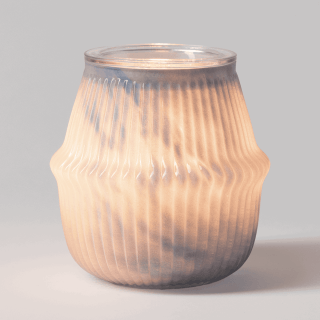 Standard Warmers melt wax with the heat of a low-watt bulb, enlivening a room with candle-like ambience. If it's the soft glow you miss from candles, start here - something like the Gossamer Haze Scentsy Warmer gives you the light as well as the fragrance. Browse Standard Warmers.
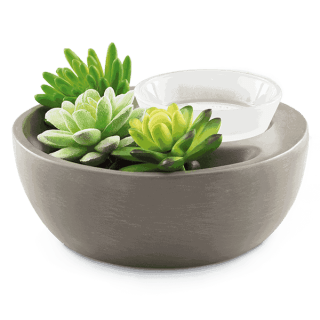 Element Warmers feature heating elements to warm wax without a light bulb. No glow, no bulb to replace, and the design gets to be the whole story - the Little Garden Scentsy Warmer is a lovely example. Browse Element Warmers.
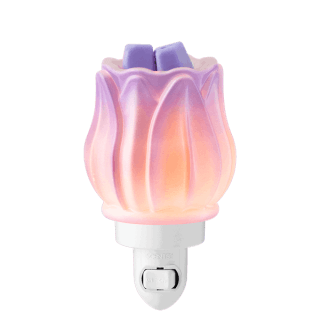 Mini Warmers plug into the wall or sit on a Mini Warmer Tabletop Base, so you can enjoy fragrance in smaller spaces. Think bathrooms, hallways, offices and bedside tables - the Prismatic Petal Mini Scentsy Warmer is a favourite of mine. Browse Mini Warmers with Wall Plug or Mini Warmers with Tabletop Base.
Search for whichever one gets you here. I'm not precious about it, and now you know why the two names float around together.
When it comes to choosing the actual product though, it's a warmer you want: electric, flameless, and built specifically for the wax that goes in it.
Have a browse through the full Warmers & Wax range and find the one that suits your space.
Australia support: support.au@scentsy.com
NZ support: support.nz@scentsy.com